Lattice Gauge Theory group
 We are the lattice gauge theory group at the Eotvos University
in Budapest, part of the Department of Theoretical Physics at the
Faculty of Science.
We are the lattice gauge theory group at the Eotvos University
in Budapest, part of the Department of Theoretical Physics at the
Faculty of Science.
Currently there are nine members and we are seeking new ones. Positions are available for PhD students and postdocs for 2 - 4 years appointments. If you are interested please email Sandor Katz at katz@bodri.elte.hu or Daniel Nogradi at nogradi@bodri.elte.hu.
Our activities are and were funded by various funding agencies for which we are grateful, these include the Lendulet grant of the Hungarian Academy of Sciences, the OTKA-NF-104034 grant of OTKA and the EU Framework Programme 7 grant (FP7/2007-2013)/ERC No 208740.
Timetable of department common room.
Research
Our primary interests are:
- Chiral symmetry restoration and deconfinement in QCD with Wilson fermions
- Finite chemical potential
- QCD hadron spectrum
- Eigenvalue distributions of the overlap Dirac operator
- Strongly interacting Higgs sector - strong dynamics
- Conformal gauge theories
Seminar
Weekly seminars at the Department of Theoretical Physics
Location: 2nd floor, 2.54, Novobatzky room, 1117 Budapest, Pazmany Peter setany 1/a
If you'd like to receive seminar email announcements please write to nogradi@bodri.elte.hu
Time: Tuesdays at 14:15
See the archive for seminars since 2014.
-
23 September 2025, Daniel Nogradi (Eotvos) slides
QFT on a rotating box at finite temperature
Finite volume QFT at finite temperature is usually formulated on the Euclidean space time T^4 in a path integral setup. Moving frames can also be incorporated on T^4 by particular boundary conditions. In this talk I describe a formulation appropriate if our spatial box is rotating. This will be realized by boundary conditions which are well-defined not on T^4 but other, topologically distinct, compact, flat, orientable 4-manifolds.
-
30 September 2025, Timea Vitos (Eotvos, Uppsala University) slides
How far have we gone and can we go with machine learning in particle physics?
Undoubtedly, the topic with the highest increase in references and discussions today in science, as well as outside of science, is the use and development of artificial intelligence. High-energy physics, as historically one of the frontiers of technology, is also keeping up with this ever-growing trend of using machine learning in various approaches. In this talk, I give a bird's view on the field of machine learning in high-energy physics, with a brief introduction to machine learning for the very beginners. As a non-expert, I would like to draw the attention of the highly interested and professional audience to that this is not a heavily research-based talk, rather, it gives some summary of the current status and gives the chance for the group to discuss possible future plans within the field.
-
7 October 2025, Levente Petho (Eotvos) slides
Exactly Solvable Potentials in Quantum Mechanics
There are two main historical approaches to identifying exactly solvable quantum mechanical potentials: one relies on mapping the Hamiltonian to differential equations associated with specific functions, while the other is based on the framework of supersymmetric quantum mechanics (SUSYQM). During my bachelor's and master's thesis work, I gained some insights into both of these approaches.
In this talk, I will outline the basic concepts behind each method and highlight some of their possible applications.
-
14 October 2025, Gabor Drotos (IFISC Palma de Mallorca, ATOMKI Debrecen) slides
Can we define climate by means of an ensemble? A tale of time scales of convergence
It is hardly questioned today that climate should be described at a theoretical level by an ensemble of trajectories differing in their initial conditions, which is then translated to numerical ensembles in climate models. We already used the concept of snapshot or pullback attractors in the past to support this view even under explicit time dependence. However, our argumentation relied on the (exponential) convergence to the natural probability distribution associated with this object, which may last longer than the time scale of practical interest. We now argue that the concept may remain theoretically meaningful and practically applicable for shorter times; the most relevant condition for this is an appropriate separation of time scales of convergence as determined by the so-called transfer operator associated with the dynamics. We propose an initialisation scheme to investigate the issue and draw consequences for practice.
-
21 October 2025, Zoltan Trocsanyi (Eotvos) slides
Lepto-baryogenesis
We present the ingredients of a computation needed for a semi-classical treatment for estimating the amount of baryogenesis via leptogenesis. Our main focus is on the computation of the finite temperature CP-asymmetry factor originating from Majorana fermion decays into a lepton and a scalar particle at next-to-leading order in perturbation theory. Such decays emerge naturally in U(1) extensions of the standard model, such as the superweak extension (SWSM). We emphasize the importance of all cuts in the one-loop corrections in order to obtain physically meaningful expressions and present benchmark predictions for the CP-asymmetry factor as a function of tempreature in the SWSM.
-
4 November 2025, Levente Fekeshazy (Eotvos) slides
Getting higher-order pQCD results in a timely manner - the importance of software optimization
In the new precision era of particle physics, theoretical calculations increasingly rely on sophisticated software solutions. Today, optimization often makes the difference between obtaining results in a reasonable timeframe and not obtaining them at all. In this seminar, I will present two projects in which delivering new physical results required significant optimization. I will first discuss our LinApart project, where we introduced a new algorithm for univariate partial fraction decomposition. Partial fraction decomposition is one of the most fundamental algebraic operations; in higher-order perturbative QCD calculations it is a vital tool for direct integration techniques and for simplifying big expressions. Therefore, the speed and memory efficiency of such algorithms are crucial. Our open-source software provides orders-of-magnitude speed-ups compared to publicly available state-of-the-art codes (e.g. Wolfram Mathematica's Apart, Maple's Parfrac), and even compared to the Euclidean method, which is often considered optimal in mathematical circles. Lastly, I will present our recent advancements in the direct calculation of time-like N2LO splitting and N3LO coefficient functions. These functions are essential components of the theoretical foundation for a future e+e- collider. Moreover, they enable the reanalysis of LEP data, leading to the extraction of more precise fragmentation functions, which in turn can improve the analysis of LHC data.
-
11 November 2025, Sam van Thurenhout (Wigner) slides
Parametric integrals for NNLOCAL
The computation of perturbative cross sections is central to the study of the physics of the Standard Model (and beyond). However, care has to be taken due to the presence of kinematic divergences, which lead to infinities at intermediate steps of the computation. A theoretically attractive method to treat these infinities is the construction of a local subtraction scheme. During a previous seminar, G. Somogyi has presented the extension of the CoLoRFulNNLO scheme to hadronic scattering processes. The main idea of the latter is to introduce approximate cross sections that capture the infrared behavior of the partonic ones. Their construction is based on the standard infrared factorization theorems of quantum chromodynamics and, upon subtraction, one is left with inherently finite quantities. Subsequently, the subtractions need to be integrated over the phase space of the unresolved emissions and added back. For a subset of the approximate cross sections, this integration is performed using integration-by-parts identities and differential equations, as was explained during P. Mukherjee's seminar last February. The remaining approximations are integrated directly by setting up a parametric representation, as will be discussed in the present talk. We will provide a general overview of the necessary steps and highlight the plethora of modern techniques used to obtain the final result.
-
17 November 2025, Maxim Chernodub (Institut Denis Poisson, Tours)
QCD matter under rotation: an overview of lattice results
We discuss several recent results on the thermodynamic ground state of rotating gluonic matter obtained in numerical calculations on lattice Yang-Mills theory. Preliminary findings for the effects of dynamical fermions will also be presented.We uncover the presence of a new thermodynamic phase that contains both confined and deconfined domains generated by rotation. The spatial arrangement of these phases challenges the naive picture dictated by the Tolman-Ehrenfest law. Furthermore, in an independent study, we show that in a certain range of phenomenologically relevant temperatures above the deconfinement transition, the moment of inertia of plasma of purely gluon plasma becomes negative.
-
18 November 2025, Kenji Fukushima (University of Tokyo)
Unstable vacuum and resummed propagators in an electric field
Inspired by recent lattice results that discovered a singularity near zero electric field, we revisited the perturbative calculation in Schwinger's method in an electric field. Some time ago, Fradkin and collaborators found an interesting proper-time representation of the propagators in the operator formalism, and we reconsider this formulation in the functional-integration form. Then, it becomes clear that seemingly equivalent forms of the partition function lead to different perturbative expansions. This reorganization of perturbation may be a clue to understanding the origin of the singularity, but there are still some puzzles that I would like to address.
-
9 December 2025, Emmanuel Ortiz-Pacheco (Eotvos) slides
Exotic Hadrons and the Doubly Heavy Tetraquarks from Lattice QCD
I present a brief overview of exotic hadrons focusing on the doubly charm tetraquark Tcc observed in 2021 by the LHCb collaboration. The lattice QCD analysis of the DD* scattering covers two isospin channels:
For the relevant isosspin-0 Tcc, I implemented meson-meson and additionally diquark-antidiquark interpolators and find that these have some impact on certain eigenenergies. This study presents the first extraction of the scattering amplitude based on both types of operators. In the end, Tcc is found to be a sub-threshold resonance where the effect of the additional operators renders a Tcc pole slightly closer to the threshold. I conclude by showing the significant effect of diquark-antidiquark operators on eigen-energies for Tbb.
In the isospin-1 counterpart, I computed the finite-volume energy levels, observing a positive energy shift relative to noninteracting energies. This indicates a repulsive interaction near the DD* threshold. Moreover, a small negative scattering length and no near-threshold poles in the scattering amplitude were found, consistent with LHCb results.
For students
Our group offers BSc/MSc diploma, PhD and TDK topics in Lattice Field Theory.
Please contact Sandor: katz@bodri.elte.hu or Daniel: nogradi@bodri.elte.hu in case you are interested.
Current topics include:
- QCD thermodynamics
- 2 and 4 dimensional CFT
- Beyond Standard Model
People
professor
2009 PhD - Eotvos University, Hungary
2010-2015 postdoc - University of Regensburg, Germany
2016-2020 Emmy Noether group leader - University of Frankfurt, Germany
2020-2024 professor - University of Bielefeld, Germany
2024- professor - Eotvos University, Budapest, Hungary
assistant professor
2009 PhD - University of Pisa, Italy
2010-2010 postdoc - IPhT/CEA-Saclay, France
2010-2012 postdoc - University of Zaragoza, Spain
2012-2015 postdoc - ATOMKI, Debrecen, Hungary
2015-2018 postdoc - Eotvos University, Budapest, Hungary
2018- assistant professor - Eotvos University, Budapest, Hungary
professor
2001 PhD - Eotvos University, Hungary
2001-2003 postdoc - DESY, Hamburg, Germany
2003-2005 postdoc - University of Wuppertal, Germany
2006-2012 assistant professor - Eotvos University, Hungary
2012- professor - Eotvos University, Hungary
professor
1996 PhD - UCLA, USA
1996-1998 postdoc - University of Colorado, Boulder, USA
1998-2000 postdoc - University of Leiden, the Netherlands
2000-2002 postdoc - DESY, Zeuthen, Germany
2002-2011 professor - University of Pecs, Hungary
2011- senior researcher - ATOMKI, Debrecen, Hungary
2020- professor, Eotvos University, Hungary
professor
2005 PhD - University of Leiden, the Netherlands
2005-2007 postdoc - University of Wuppertal, Germany
2007-2009 postdoc - UCSD, USA
2009-2011 senior research fellow - Eotvos University, Budapest
2012 - 2020 assistant professor - Eotvos University, Budapest
2020- professor - Eotvos University, Budapest
assistant professor
2015 PhD - Eotvos University, Hungary
2016-2018 postdoc - Wuppertal University, Germany
2018-2024 postdoc - Eotvos University, Hungary
2024- assistant professor - Eotvos University, Hungary
PhD student
2022- Eotvos University, Hungary
Former members
PhD student
2021-2025 Eotvos University, Hungary
postdoc
2020 PhD - University of Debrecen, Hungary
2020 - postdoc - Eotvos University, Hungary
PhD student
2023- postdoc, Technical University, Hungary
2018-2023 Eotvos University, Hungary
PhD student
2016 - 2023 Eotvos University, Hungary
2013 PhD - University of Calcutta, India
2013-2016 postdoc - Eotvos University, Hungary
2016-2018 postdoc - National Chiao Tung University, Taiwan
2018- postdoc - Los Alamos National Laboratory, USA
2013 PhD - University of Pecs, Hungary
2013-2016 postdoc - Eotvos University, Budapest
2017- postdoc - Bonn University, Germany
2017 PhD - Eotvos University, Hungary
2017- postdoc - Wuppertal University, Germany
2005-2006 research assistant - University of Wuppertal, Germany
2007 assistant lecturer - University of Pecs, Hungary
2010 PhD - Eotvos University, Hungary
2010- postdoc - University of Wuppertal, Germany
PhD student
2015 PhD - Eotvos University, Hungary
PhD student
2018- Eotvos University, Hungary
Publications
Computing
Our group has access to a number of high performance computer installations in Europe and also maintains several PC and GPU clusters on site in Budapest.
For visitors
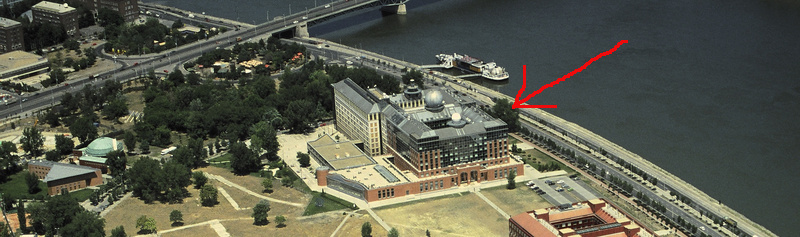
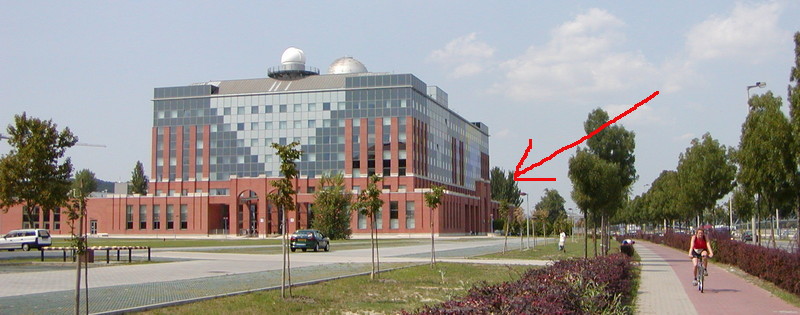
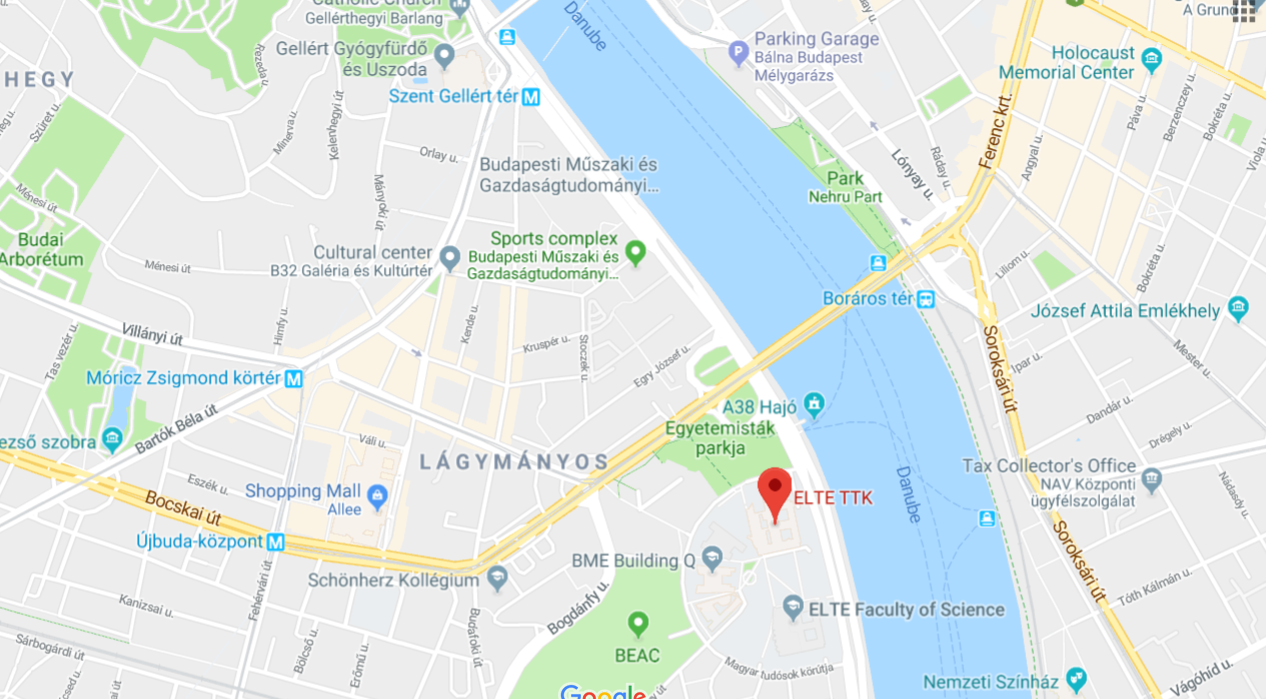
Our department is on the Buda side of the Danube very close to the Petofi Bridge, the address is Budapest 1117, Pazmany Peter setany 1/A:
The Department of Theoretical Physics is on the sixth floor opposite the Danube facing side of the building: